Sites for medical resources
All of these sites have something unique and helpful to offer, so be sure to look at each one. Just remember that these sites are not substitutions for a real doctor's advice.
Ask A Patient - Do you really know what you're in for when you take medication? Medical science has come a long way, but sometimes medication cons outweigh the pros.
This site is for anyone who is worried about trying a new physician-prescribed medication. You can look through reviews from real people about the experiences (positive and negative) they've had on doctor-prescribed medication to make more educated decisions. Just remember to take everything on this site with a grain of salt.
LongTermCare.gov - For those of you who worry about aging parents or grandparents, this is a great site to start planning for the future. Planning for that sort of thing is easy to put off, but if you don't think about the future, you may be left high and dry if trouble strikes.
This site answers questions about long-term care for your loved ones like the difference between Medicare and Medicaid, and long-term care versus custodial care. The more information you have, the better the chance will be that you make the best decision for your loved ones.
PDR Health - Asking other people about their experiences can be helpful, but when it comes to the medical field it's important to listen to your doctor. After all, they do have years of medical training.
Physicians' Desk Reference has a huge database of medication information, as well as information about diseases, conditions, and what you should avoid when taking medications.

Hospitals rank alarm fatigue as top patient safety concern
Nineteen out of 20 hospitals surveyed rank alarm fatigue as a top patient safety concern, according to the results of a national survey presented last week at the annual meeting of the Society for Technology in Anesthesia.
Alarm fatigue occurs when clinicians become desensitized to the constant noise of alarms or overwhelmed by the sounds and turn alarms down or off. The problem has become so widespread that last month The Joint Commission named it a National Patient Safety Goal and now requires accredited hospitals and critical access hospitals to improve their systems.
Related Articles:
Monitor adjustments reduce alarm fatigue at Boston hospital
Patient safety goal aims to end clinical alarm fatigue
Alarm fatigue tops health technology hazards list
Patient death attributed to alarm fatigue, sounding alarm in nation
Patients continually put in danger due to alarm fatigue
Read more about: National Patient Safety Goal
Alarm fatigue occurs when clinicians become desensitized to the constant noise of alarms or overwhelmed by the sounds and turn alarms down or off. The problem has become so widespread that last month The Joint Commission named it a National Patient Safety Goal and now requires accredited hospitals and critical access hospitals to improve their systems.
Related Articles:
Monitor adjustments reduce alarm fatigue at Boston hospital
Patient safety goal aims to end clinical alarm fatigue
Alarm fatigue tops health technology hazards list
Patient death attributed to alarm fatigue, sounding alarm in nation
Patients continually put in danger due to alarm fatigue
Read more about: National Patient Safety Goal
Telestroke: Improving Stroke Care for Rural Arizona Residents
Telestroke: Improving Stroke Care for Rural Arizona Residents
By Jane Erikson on Jan 21, 2014 03:41 pm
In 2005, patients who were hospitalized with an ischemic stroke
in Tucson or Phoenix were 10 times as likely to receive potentially
life-saving medical care as patients treated at hospitals in rural
Arizona.
Today, patients in rural Arizona have as good or even better chance of receiving the best possible treatment – a “clot-busting” drug called tPA - compared with stroke patients in the state’s two largest cities.
The change came about because of the Telestroke Program at the Mayo Clinic – Phoenix.
Today, patients in rural Arizona have as good or even better chance of receiving the best possible treatment – a “clot-busting” drug called tPA - compared with stroke patients in the state’s two largest cities.
The change came about because of the Telestroke Program at the Mayo Clinic – Phoenix.
Read more »
PSFK presents Future Of Health
PSFK presents Future Of Health from PSFK
Advances in technology are allowing for the provision of affordable, decentralized healthcare for the masses and are lowering the barriers to entry in less developed markets.
The analysis in PSFK’s Future of Health Report has yielded a number of insights, the most evident of which is mobile technology as a catalyst for change. The mobile phone and connected tablet computer are allowing for the distribution of a broad range of medical and support services. This is especially important in countries with little or no healthcare infrastructure and areas in which there are few trained healthcare professionals. These technologies also allow trained professionals to perform quality control remotely.
Advances in technology are allowing for the provision of affordable, decentralized healthcare for the masses and are lowering the barriers to entry in less developed markets.
The analysis in PSFK’s Future of Health Report has yielded a number of insights, the most evident of which is mobile technology as a catalyst for change. The mobile phone and connected tablet computer are allowing for the distribution of a broad range of medical and support services. This is especially important in countries with little or no healthcare infrastructure and areas in which there are few trained healthcare professionals. These technologies also allow trained professionals to perform quality control remotely.
SAFER Guides help optimize safe use of EHRs
 A
new set of guides and interactive tools designed to help health care
providers use electronic health records (EHRs) more safely has been
released by the Department of Health and Human Services’ Office of the
National Coordinator for Health Information Technology (ONC). The SAFER Guides
are a suite of tools that include checklists and recommended practices
to help health care providers assess and optimize the safety and safe
use of EHRs.
A
new set of guides and interactive tools designed to help health care
providers use electronic health records (EHRs) more safely has been
released by the Department of Health and Human Services’ Office of the
National Coordinator for Health Information Technology (ONC). The SAFER Guides
are a suite of tools that include checklists and recommended practices
to help health care providers assess and optimize the safety and safe
use of EHRs.
The
SAFER Guides complement AHRQ’s existing safety tools and research.
AHRQ’s Patient Safety Organizations have identified health IT as a high
priority given the impact EHRs are having on patient safety right now.
AHRQ has a wide variety of health IT tools and resources to help
implement and use Health IT safely including the Health IT Hazard Manager, the Workflow Assessment for Health IT Toolkit, Implementation Tools for E-Prescribing, Consumer Health IT Design Guide, and the Guide to Reducing Unintended Consequences of EHRs.
Deloitte’s four P’s for mobile health best practices
 Mobile
health strategies shouldn’t be one-size-fits-all, Dr. Harry Greenspun,
Deloitte’s Senior Advisor on Health Care Transformation and Technology,
wrote in a recent blog post. There are four dimensions that need to be
considering in developing a mobile health intervention or technology.
Greenspun breaks down the focus areas into four P’s: People, Payment,
Places, and Purpose. More
Mobile
health strategies shouldn’t be one-size-fits-all, Dr. Harry Greenspun,
Deloitte’s Senior Advisor on Health Care Transformation and Technology,
wrote in a recent blog post. There are four dimensions that need to be
considering in developing a mobile health intervention or technology.
Greenspun breaks down the focus areas into four P’s: People, Payment,
Places, and Purpose. More
Telemonitoring to Support Diabetes Management in Patient Centered Medical Homes
New
research supported by the Agency for Healthcare Research and Quality
(AHRQ) uncovered important implementation considerations for
telemonitoring of blood glucose and blood pressure in diabetes patients
receiving care in patient-centered medical homes. “Implementing home
blood-glucose and blood-pressure telemonitoring in primary care
practices for patients with diabetes: Lessons Learned,” appeared online
December 18, 2013 in Telemedicine and e-health. Researchers
gathered perspectives from stakeholders including patients, nurse care
coordinators, and physicians to understand the impact of telemonitoring
diabetes in primary care practices. Stakeholders emphasized the need to
involve and prepare physicians and patients to effectively use
telemonitoring. They also stressed the importance of considering
workflows, flow of information, and human factors to optimize use of the
technology.
Select to access the abstract: http://www.ncbi.nlm.nih.gov/
IOM Seeks To Help Providers Assess EHR Costs, Benefits
 The Institute of Medicine has released a
proposed model aimed at helping hospitals and other health care
providers evaluate the costs and benefits of implementing electronic
health record systems by making comparisons among organizations and
identifying best practices. FierceEMR et al.
The Institute of Medicine has released a
proposed model aimed at helping hospitals and other health care
providers evaluate the costs and benefits of implementing electronic
health record systems by making comparisons among organizations and
identifying best practices. FierceEMR et al.
UnitedHealthcare, Zamzee partner for weight loss pilot
 Last year, UnitedHealthcare announced a partnership with Konami to bring
the classroom version of its DanceDanceRevolution exergame to a pilot
group of schoolchildren in Florida, Georgia, and Texas. Now
UnitedHealthcare is continuing that pilot, adding a fourth school in
Southern California. The company is also starting a new pilot with
another big name in the kids’ digital health space — social activity
tracker platform Zamzee. Join
for Me is a 12-month community program geared towards helping overweight
and obese 6 to 17-year-olds lose weight and reduce their risk of Type 2
diabetes. According to Henderson, Zamzee activity trackers will be
given to both children and parents to help encourage movement and
activity while participants are at home or school and away from the
YMCA-based program. The pilot will collect data comparing kids who used
Zamzee with other kids in the Join for Me program. More
Last year, UnitedHealthcare announced a partnership with Konami to bring
the classroom version of its DanceDanceRevolution exergame to a pilot
group of schoolchildren in Florida, Georgia, and Texas. Now
UnitedHealthcare is continuing that pilot, adding a fourth school in
Southern California. The company is also starting a new pilot with
another big name in the kids’ digital health space — social activity
tracker platform Zamzee. Join
for Me is a 12-month community program geared towards helping overweight
and obese 6 to 17-year-olds lose weight and reduce their risk of Type 2
diabetes. According to Henderson, Zamzee activity trackers will be
given to both children and parents to help encourage movement and
activity while participants are at home or school and away from the
YMCA-based program. The pilot will collect data comparing kids who used
Zamzee with other kids in the Join for Me program. More
Video game maker partners with Pfizer for Alzheimer’s clinical trial
Boston-based
Akili Interactive Labs partnered with Pfizer to conduct a study of
Akili’s iOS-based game, Project Evo, in the hopes of using the game to
detect indications of Alzheimer’s in healthy individuals.
 The month-long study of 100 participants includes a mix of some who
have risk markers of potentially developing Alzheimer’s and some who do
not. All participants will take the game home and play it daily while
researchers test whether the algorithms within the game can distinguish
the group with risk markers. More
The month-long study of 100 participants includes a mix of some who
have risk markers of potentially developing Alzheimer’s and some who do
not. All participants will take the game home and play it daily while
researchers test whether the algorithms within the game can distinguish
the group with risk markers. More
 The month-long study of 100 participants includes a mix of some who
have risk markers of potentially developing Alzheimer’s and some who do
not. All participants will take the game home and play it daily while
researchers test whether the algorithms within the game can distinguish
the group with risk markers. More
The month-long study of 100 participants includes a mix of some who
have risk markers of potentially developing Alzheimer’s and some who do
not. All participants will take the game home and play it daily while
researchers test whether the algorithms within the game can distinguish
the group with risk markers. More
Gamification in Healthcare
Gamification Trends:
Here’s to seeing even more at 2014! (Especially with all that new stuff at CES)
read more
You build new networks that can be used outside the game, then strengthen them through repetition. Now there’s the highly contextualized questions of what skills the game is creating and if its transferable outside that game into the real world. Not all games develop the same skills and not all skills are used in particular fields (these studies are relatively new so expect new insights in the future). Knowledge management has two terms I adopted to understand knowledge transfer from games: adaptation and exaptation, which can acts a lens to understand knowledge transfer from playing games.
read more
 Alzheimer’s Australia Vic has opened up
Australia’s first dementia learning center to educate people about the
effects of dementia through virtual-reality simulations, according to
Australian Ageing Agenda.
Alzheimer’s Australia Vic has opened up
Australia’s first dementia learning center to educate people about the
effects of dementia through virtual-reality simulations, according to
Australian Ageing Agenda.
The simulation’s primary goal is allow students to envision the cognitive and perceptual difficulties that dementia sufferers deal with in their daily life routines.
read more
The Best of Health Gamification in 2013
In our next collection from the best gamification stories of 2013, we have a cornucopia of healthy gamified applications for everyone to check out. Gamification Co readers were most interested in seeing new health apps in 2013 and we have about 20 of the top health apps for you to check out here.Here’s to seeing even more at 2014! (Especially with all that new stuff at CES)
read more
How Gameplay Transfers Knowledge into Skills
Games are tools for rewiring your brain. When you’re playing a game what you’re essentially doing is building new neurological connections and strengthening them with a process called myelination.You build new networks that can be used outside the game, then strengthen them through repetition. Now there’s the highly contextualized questions of what skills the game is creating and if its transferable outside that game into the real world. Not all games develop the same skills and not all skills are used in particular fields (these studies are relatively new so expect new insights in the future). Knowledge management has two terms I adopted to understand knowledge transfer from games: adaptation and exaptation, which can acts a lens to understand knowledge transfer from playing games.
read more
New Australian Facility is Teaching Dementia-Care By Simulating It
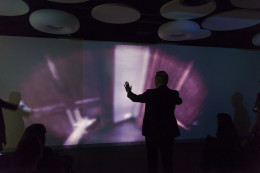 Alzheimer’s Australia Vic has opened up
Australia’s first dementia learning center to educate people about the
effects of dementia through virtual-reality simulations, according to
Australian Ageing Agenda.
Alzheimer’s Australia Vic has opened up
Australia’s first dementia learning center to educate people about the
effects of dementia through virtual-reality simulations, according to
Australian Ageing Agenda.The simulation’s primary goal is allow students to envision the cognitive and perceptual difficulties that dementia sufferers deal with in their daily life routines.
read more
Slideshow: Health devices launched at CES 2014
 |
| French company Medissimo’s smart pill box imedipac is a feature-filled spin on medication adherence hardware. The device both reminds patients to take pills and tracks when they have using GPS. Users can review information on their computer or on specialized phone or tablet apps. It can send alarms via text message, email, or even call you on the phone and leave voice messages. |
Vida! Engaging Citizens in Their Own Health
 ¡Vida!
emerged from work with breast cancer survivors who, despite five years
or more since the breast cancer diagnosis, clearly articulated their
goal not only to live, but to live well.
¡Vida!
emerged from work with breast cancer survivors who, despite five years
or more since the breast cancer diagnosis, clearly articulated their
goal not only to live, but to live well.Named from the Spanish word meaning “life,” ¡Vida! is a monthly partner educational series for patients and their professional health care teams. Guided by a broad-based Community Partnership Group, ¡Vida! has been proactively addressing the identified needs of patients and their families across the state of Arizona.
While ¡Vida! originally began with a focus on breast cancer survivorship, the series has evolved to include topics related to lifestyle medicine, wellness, and advocacy with the overarching goal of engaging Arizona’s citizens in their own health!
Read more »
Telehealth 'parity' continues to make inroads via state legislation
Individual states continue to press forward with telehealth legislation,
as evidenced by recent news out of Montana and a forthcoming effort in
Florida.
Telehealth Coverage for Extended for Military Service Members
The 2014 National Defense Authorization Act signed last week by
President Obama includes a measure designed to bolster military service
members' access to telemedicine services. The measure will extend the
Transitional Assistance Management Program by 180 days for all services
delivered via telemedicine. FierceHealthIT, Rep. Thompson release. More
Medical Technology Stories To Watch at CES 2014
forbes.com · At the upcoming Consumer Electronics Show, (CES 2014) this January in
Las Vegas, expect a storyline shift away from the annual event’s
typical focus on everyday consumer electronics — such as smartphones,
tablets and televisions — towards other growth markets such as medical
technology, health products and applications. Including
Real-time remote monitoring, Aging-in-Place offerings....More
Real-time remote monitoring, Aging-in-Place offerings....More
Do Patient Portals Improve Healthcare?
Do Patient Portals Improve Healthcare? - InformationWeek informationweek.com
 Study results are mixed on how portals affect the quality and efficiency of patient care, suggesting more research is needed.
- Healthcare practices need to focus more on patient engagement when it comes to web portals. Read Patient Portals Aren't Very Patient Centric
Medicare and Medicaid to encourage more telehealth visits in 2014

CEO at Revation Systems, Inc.
Medicare and Medicaid to encourage more telehealth visits in 2014
http://hub.am/K6HpOR
http://hub.am/K6HpOR

Study shows how telehealth networks can save lives and money.
New CPT Codes Approved for Telehealth
 In Medicare’s 2014 physician fee schedule, the Centers for Medicare
and Medicaid Services outlined several new telehealth services and
service regions that will be reimbursed by the federal government
starting 2014. These changes include new services for mental health
providers. …More
In Medicare’s 2014 physician fee schedule, the Centers for Medicare
and Medicaid Services outlined several new telehealth services and
service regions that will be reimbursed by the federal government
starting 2014. These changes include new services for mental health
providers. …More
8 Notes About Changes to EHR Stage 2/Stage 3
 CMS and ONC recently
extended Stage 2 of the EHR meaningful use program, delayed the start of
Stage 3 by a year until 2017, and tweaked the EHR certification program.
But the actions aren’t as much of a reprieve to providers as they
might appear; there are tradeoffs. Here’s a look at the changes. HDM Resources
CMS and ONC recently
extended Stage 2 of the EHR meaningful use program, delayed the start of
Stage 3 by a year until 2017, and tweaked the EHR certification program.
But the actions aren’t as much of a reprieve to providers as they
might appear; there are tradeoffs. Here’s a look at the changes. HDM ResourcesRead More »
Care Beyond Walls and Wires: Telemedicine Home-Health Monitoring Program is Changing Patient Lives

 Care Beyond Walls and Wires, it’s a telemedicine-based, home-health
monitoring program that has significantly improved the health of most
participating patients, while reducing emergency room visits and
hospital admissions and readmissions, and decreasing the length of stay
for those who still require hospitalization.
Care Beyond Walls and Wires, it’s a telemedicine-based, home-health
monitoring program that has significantly improved the health of most
participating patients, while reducing emergency room visits and
hospital admissions and readmissions, and decreasing the length of stay
for those who still require hospitalization. Qualcomm funded the Care Beyond Walls pilot study. When it ended on April 1, 2013, Northern Arizona Healthcare took on the costs of continuing Care Beyond Walls and Wires. More
FDA Regulation of Mobile Health 2013
 FDA at last has published its final guidance on mobile medical apps.
Further, the mHealth industry has morphed several times over the last
couple years. Consequently, in this second edition, more than 80 percent
of the content is new. Download here
Not only have I updated the regulatory analysis, but I’m also
covering a few new topics like FDA regulation of pharmaceutical apps. More
FDA at last has published its final guidance on mobile medical apps.
Further, the mHealth industry has morphed several times over the last
couple years. Consequently, in this second edition, more than 80 percent
of the content is new. Download here
Not only have I updated the regulatory analysis, but I’m also
covering a few new topics like FDA regulation of pharmaceutical apps. More
Home telehealth helps specialists reach Parkinson’s patients
 In a study published this month as an open-access article in the journal Neurology: Clinical Practice,
100 percent of the 55 patients who participated in a virtual house call
with a neurologist said they were likely to recommend telemedicine to a
friend. The researchers, from Johns Hopkins University in Baltimore and
the University of Rochester (N.Y.), found patient satisfaction levels
topping 90 percent for most aspects of remote consultations. More
In a study published this month as an open-access article in the journal Neurology: Clinical Practice,
100 percent of the 55 patients who participated in a virtual house call
with a neurologist said they were likely to recommend telemedicine to a
friend. The researchers, from Johns Hopkins University in Baltimore and
the University of Rochester (N.Y.), found patient satisfaction levels
topping 90 percent for most aspects of remote consultations. More
Meaningful Use Portal Updates in USHIK
The Meaningful Use Portal
in the AHRQ-funded United States Health Information Knowledgebase
(USHIK) has been updated with new functionality. The portal is a
one-stop shop for Meaningful Use Stage 1 and Stage 2 Clinical Quality
Measures, their computation logic, their data elements, and the
vocabularies and codes the data elements may take on.
What is USHIK?
The United States Health Information Knowledgebase (USHIK) is an on-line, publicly accessible registry and repository of healthcare-related data, metadata and standards. USHIK is funded and directed by the Agency for Healthcare Research and Quality (AHRQ) with management support in partnership with the Centers for Medicare & Medicaid Services (CMS). More
Text message interventions work best when they’re tailored
Text
messages have been proven several times to be a positive medium for
improving health outcomes. Text message intervention studies for smoking cessation, medication adherence and weight loss have all come back with positive results.
While all of the studies focused on tailoring messages, the researchers agreed that a good next step for texting studies is a three-way texting system, which is helpful to adding an even more human element to the intervention.
“In other studies that we’ve done we’ve created three-way messages, send out, come back in and receive a tailored message based on your response,” .... “And we found that patients sometimes think that it’s their doctor texting back. So we’ve used it as a communication tool, to really think that they’re being cared about.” More
While all of the studies focused on tailoring messages, the researchers agreed that a good next step for texting studies is a three-way texting system, which is helpful to adding an even more human element to the intervention.
“In other studies that we’ve done we’ve created three-way messages, send out, come back in and receive a tailored message based on your response,” .... “And we found that patients sometimes think that it’s their doctor texting back. So we’ve used it as a communication tool, to really think that they’re being cared about.” More
6 regulatory and procedural hurdles for multistate telemedicine
For the most part, the laws that govern the practice of medicine in the
United States are state laws. One of the few things Federal law does say
is that jurisdiction of those laws is based on the patient’s location,
not the doctor’s. That’s tough news for a mobile health company that
wants to establish any sort of multi-state telemedicine practice,
whether it’s evaluating moles and blemishes via store-and-forward
dermatology or doing virtual video consultations on an iPad. More
EHR Use Boosts Diabetes Care, Federally Funded Project Finds

|
A study by the Western New York Beacon Community finds that the use of electronic health records and other health IT helped improve the care of patients with diabetes and reduce costs. The study was funded through a $16.1 million Office of the National Coordinator for Health IT grant. Buffalo News, FierceHealthIT. More |
The Transparency Tipping Point
 Patients are engaged and participate in their care when they can view their medical records.
The Issue:
With the increasing use of electronic health records (EHRs), patients have more access to their lab and medical records. What is less often seen by patients, however, are the notes doctors enter in the medical record. The Robert Wood Johnson Foundation-funded OpenNotes initiative sought to find out how patients would use and feel about open access to doctors’ notes. Others now are experimenting with OpenNotes and exploring how they might change doctors’ practices. More
AHRQ’s Innovations Exchange Focuses on Mental Health Care in Rural Settings
 The latest issue of the AHRQ Health Care Innovations Exchange
features three innovation profiles describing programs that increased
access and improved mental health care for individuals living in rural
areas. One of the featured profiles
describes a program at the University of Virginia Health System in
Charlottesville, in which psychiatric fellows and residents use
videoconferencing to serve children and adults with mental illness who
live in rural parts of the state. More
The latest issue of the AHRQ Health Care Innovations Exchange
features three innovation profiles describing programs that increased
access and improved mental health care for individuals living in rural
areas. One of the featured profiles
describes a program at the University of Virginia Health System in
Charlottesville, in which psychiatric fellows and residents use
videoconferencing to serve children and adults with mental illness who
live in rural parts of the state. More
Mayo’s iPad study had 98 percent engagement among seniors
 “Patient
participation is completely dependent on usability,” Cook said at a
session at the mHealth Summit near Washington, DC. “Healthcare
technology and tools are not meaningful unless they’re integrated with
care plans and expectations, and that’s dependent on delivering
knowledge to patients. Once you have a usable tool, you can help
self-assessment and reporting, data acquisition and aggregation is
meaningful, and clinically meaningful algorithms can impact patient
outcomes.” More
“Patient
participation is completely dependent on usability,” Cook said at a
session at the mHealth Summit near Washington, DC. “Healthcare
technology and tools are not meaningful unless they’re integrated with
care plans and expectations, and that’s dependent on delivering
knowledge to patients. Once you have a usable tool, you can help
self-assessment and reporting, data acquisition and aggregation is
meaningful, and clinically meaningful algorithms can impact patient
outcomes.” More
Subscribe to:
Posts (Atom)
e-Behaviorial Health
Benefit from new technologies... enable people to have remote access to CBT
